Road safety analysts to take stock of progress since the national strategy at Joining the Dots 2027

Joining the Dots will return to the IET in Birmingham on Tuesday 2 March 2027 for its 12th year. The programme will focus on what has changed for road safety data since the government published its Road Safety Strategy, and how analysts can measure progress towards its targets.
Kate Carpenter, President of the Chartered Institution of Highways & Transportation (CIHT), will open the conference. Kate is Director of Operational Road Safety at Jacobs and has specialised in highway safety governance for 27 years
The programme draws largely on papers submitted by people working across the profession. Speakers will come from national government, highway authorities, local authorities, universities, emergency services and consultancies. The day will combine whole-conference sessions with parallel streams, panel discussion and a hands-on workshop.
Three threads will run through the day. The first is the push to see the whole picture of a collision. STATS19 remains the foundation of road safety analysis, and the closing session will share new evidence on how collision severity gets recorded and on efforts to agree injury reporting standards internationally. Alongside it, a growing body of work links police records with ambulance, hospital and vehicle data. Speakers will show what that linking reveals about how collisions happen and what happens to the people involved. Connected vehicle data will feature across the programme, from national road safety intelligence to targeting speed enforcement.
The second thread asks who carries the risk. National targets measure averages, and the programme will look at the people those averages can hide. They include communities where pedestrian risk differs from what deprivation measures would predict, and vulnerable road users, whose casualty numbers have fallen far more slowly than those of vehicle occupants. The programme will also consider people whose access to help after a collision may depend on where it happens.
The third thread is evaluation: finding out what works. Highway authorities will share evidence from junctions, motorways and local roads, alongside real-world evaluations of vehicle safety standards and in-vehicle technology. The post-crash response workshop will put this into practice, with delegates working in small groups through case material that follows a collision from the first record to the care that followed.
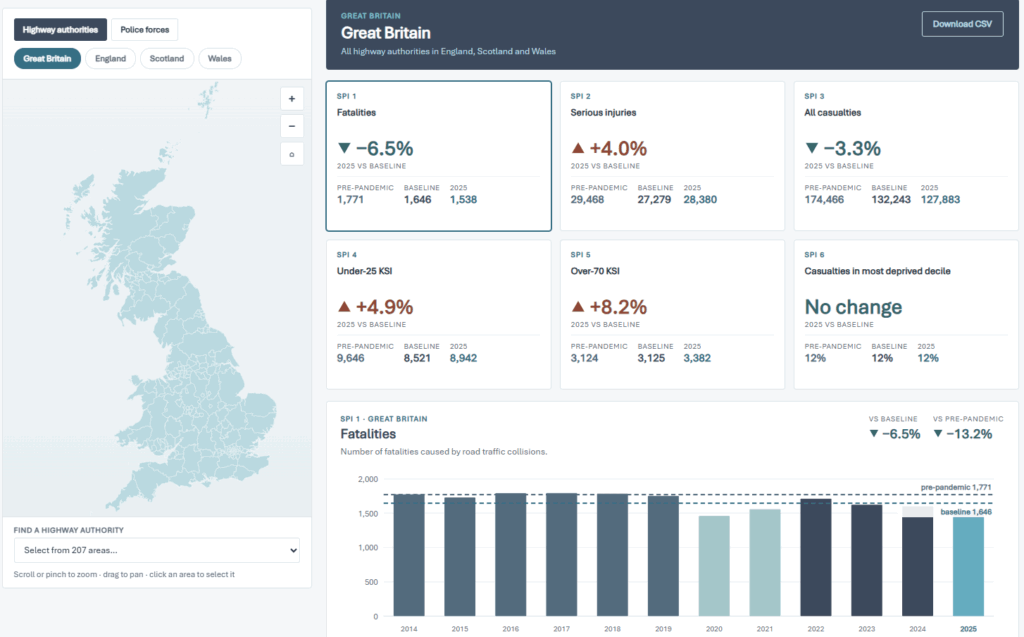
For road safety analysts, the conference offers evidence to benchmark their own work against the new Safety Performance Indicators. Delegates will also see practical methods they can test on their own data, and get a day with peers working on the same problems in other parts of the country.
Dan Campsall, Chairman of Agilysis, said: “The Road Safety Strategy has given the profession national targets to work towards, and analysts are the people who will show whether we’re getting there. Joining the Dots exists so they can learn from each other: what’s working, which data holds up, and where the gaps still are. This year’s programme reflects that, and the workshop gives delegates the chance to get hands-on with the evidence.”
Standard tickets cost £180. RSGB members and users of MAST, the Speed Compliance Tool and CrashMap Pro can book at the earlybird rate of £99 until 30 November 2026.
Tickets are available at roadsafety.network/conference.