
Delivering Safer Speeds at Scale in Oxfordshire
Customer success story
Why Speed Compliance Tool has worked for Oxfordshire
| Why SCT has worked | What this meant for Oxfordshire |
|---|---|
| Network‑wide speed data | Enabled consistent analysis across rural A and B roads, rather than relying on isolated survey locations |
| Strong alignment with tube surveys | Validation against traditional surveys built confidence to use SCT as a primary data source |
| Focus on real‑world driving behaviour | Revealed where national speed limits did not reflect actual operating speeds, particularly on rural roads |
| Faster access to evidence | Reduced reliance on time‑consuming physical surveys and supported quicker decision‑making |
| Clear, map‑based outputs | Made it easier to prepare consultation and engagement materials with accessible evidence |
The Challenge
Oxfordshire County Council is delivering one of the most ambitious speed management programmes in the UK, supporting its commitment to Vision Zero and safer roads for all. This includes:
- A countywide 20mph programme, now approaching the final stages of rollout
- A comprehensive review of speed limits on rural A and B roads, focused on reducing fatal and serious injury collisions
Historically, assessing speeds across the network relied on temporary pneumatic tube surveys. While effective at individual locations, this approach was resource‑intensive, time‑consuming, and limited in coverage, making it difficult to scale analysis across hundreds of kilometres of road. The council needed a more efficient, network‑wide way to understand actual driving speeds and to inform evidence‑led speed limits
The Solution
Agilysis’ Speed Compliance Tool (SCT) provides Oxfordshire with consistent, network‑wide access to speed data, supporting both strategic planning and day‑to‑day delivery.
The council divided its rural A and B road network into defined speed‑limit sections and used SCT to analyse mean and 85th‑percentile speeds across the network. To build confidence, SCT outputs were validated against approximately ten traditional tube surveys. The results showed strong alignment, particularly for 85th‑percentile speeds, giving Oxfordshire confidence to adopt SCT as a primary source of speed data.
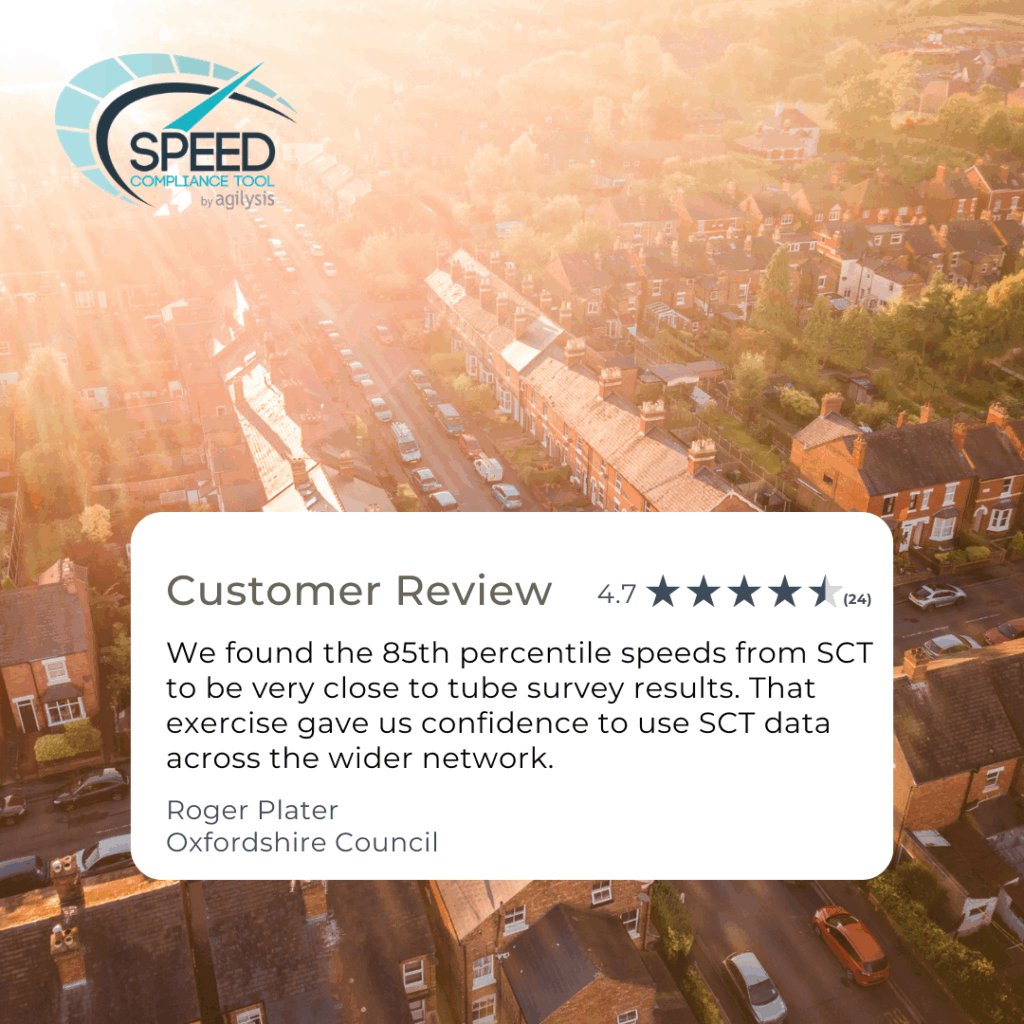
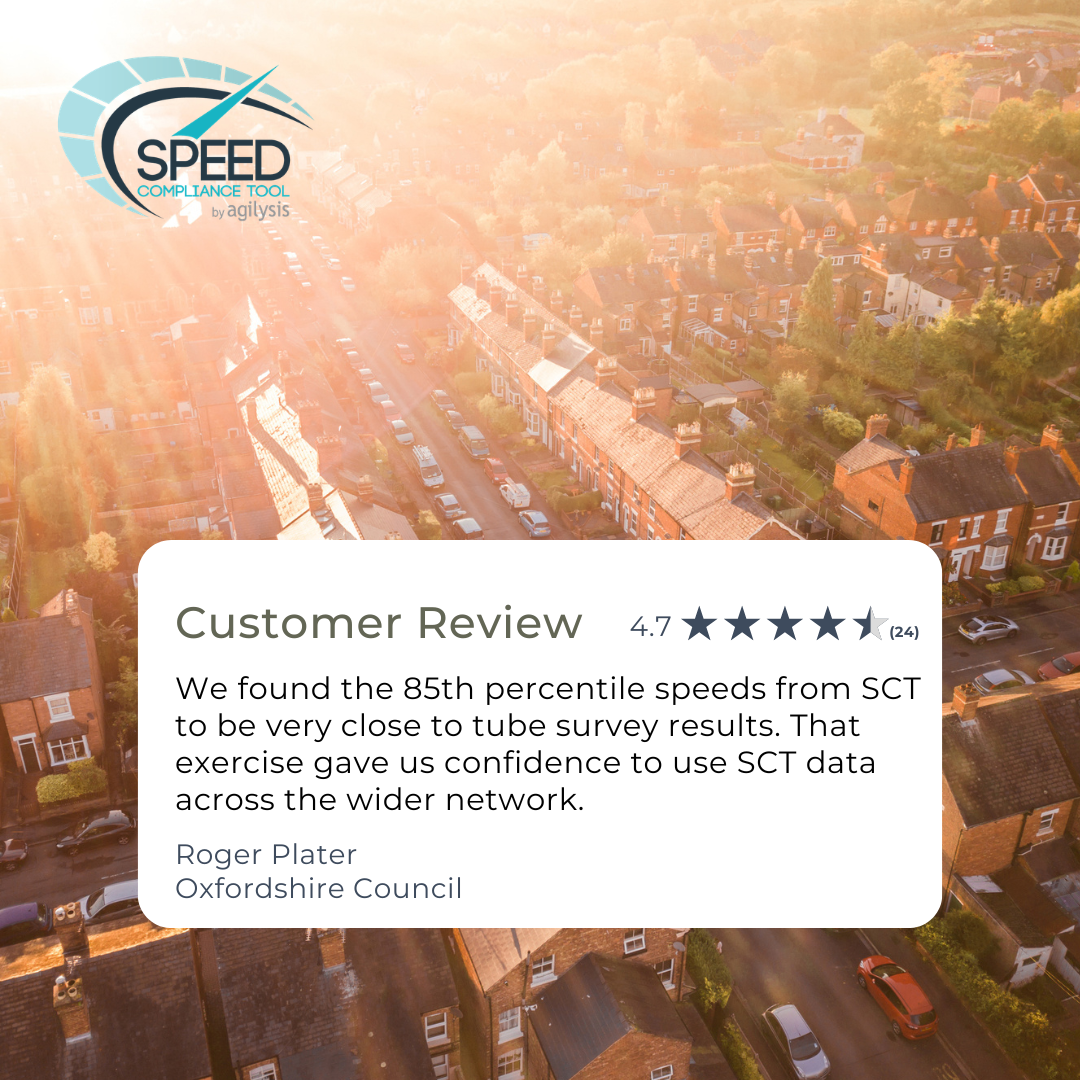
“We found the 85th percentile speeds from SCT to be very close to tube survey results. That exercise gave us confidence to use SCT data across the wider network.”
Crucially, SCT enables the council to assess actual operating speeds, rather than relying solely on posted limits. This insight is especially valuable on rural roads, where national speed limits do not always reflect real‑world driving behaviour. In several cases, SCT highlighted roads signed at the national speed limit where prevailing speeds were closer to 40mph, providing robust evidence to support safer, more credible speed limits.
SCT’s map‑based platform, combining speed limits and observed speeds, has also transformed how Oxfordshire prepares consultation and engagement materials, reducing manual effort and making evidence readily accessible.
“SCT provides a very handy way of having that information readily accessible. It has made the review process much more efficient.”
The Impact
By adopting the Speed Compliance Tool, Oxfordshire County Council has achieved clear operational and strategic benefits:
- Reduced reliance on physical surveys, saving time, staff resources, and costs
- Network‑wide visibility of speeds, supporting consistent, county‑level decision‑making
- Faster programme delivery, with quicker access to evidence for reviews and consultations
- More credible, evidence‑based speed limits, aligned with actual driver behaviour
Speed management is a core component of Oxfordshire’s Vision Zero strategy. With SCT, the council now has accessible, reliable speed intelligence that helps identify risk more effectively, set safer speed limits, and deliver large‑scale safety programmes with confidence.